

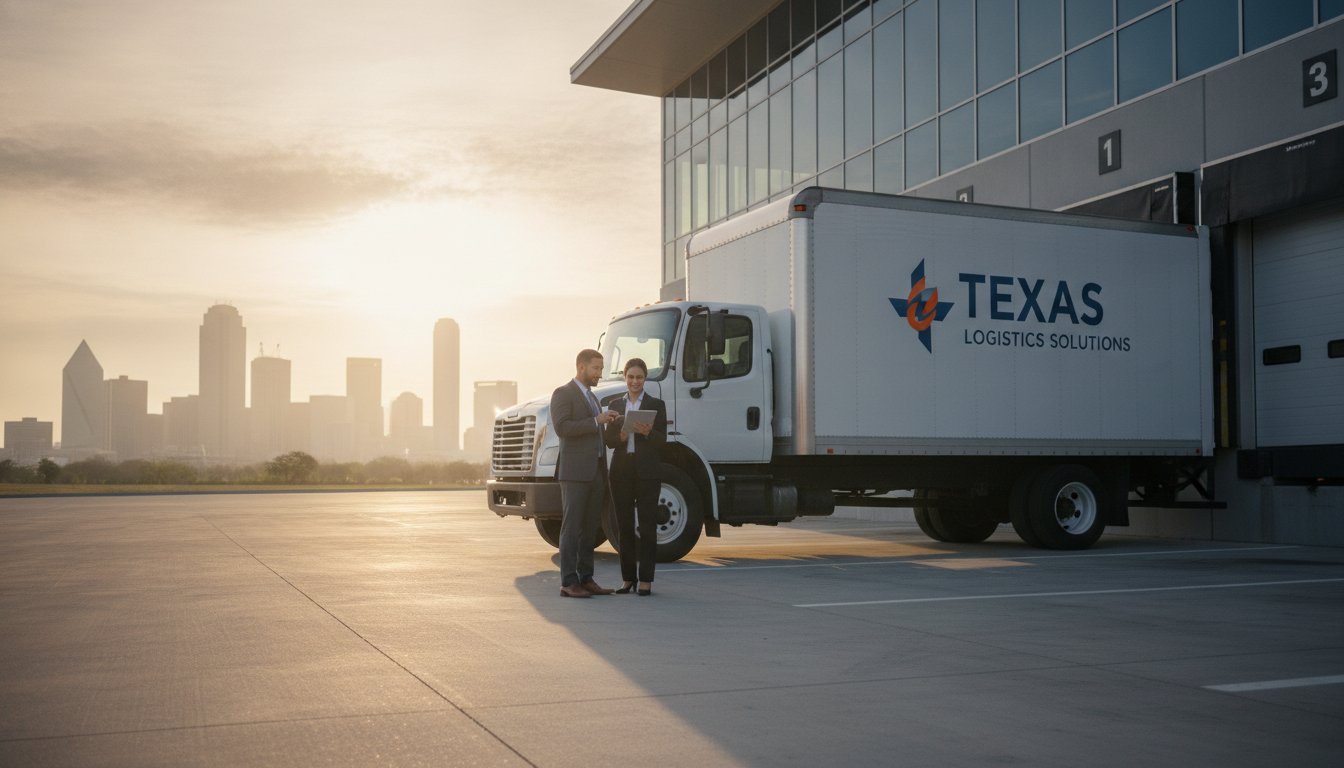
Did you know that box truck insurance premiums in the Dallas-Fort Worth and Houston metros are projected to rise by up to 10% through the second quarter of 2026? For many Texas fleet owners, these escalating costs feel like an unavoidable tax on growth. You're likely balancing the need for bulletproof coverage with the pressure to keep your margins healthy; all while trying to decipher the technical differences between TxDOT and FMCSA filing requirements. It's a high-stakes environment where a single denied cargo claim or a filing error can stall your operations for weeks.
This comprehensive guide provides the strategic clarity you need to master these complexities, ensuring you protect your Texas-based fleet while actively optimizing your operational costs. We'll examine the latest 2026 state mandates, risk management techniques designed to lower your annual premiums, and the specific steps required to ensure fast claim processing. By the end of this article, you'll have a clear roadmap to maintain full compliance and financial stability in the competitive Texas logistics market.
Box truck insurance, often referred to in the logistics industry as straight truck insurance, is a specialized form of commercial vehicle insurance designed for vehicles where the cargo area and the power unit share a single, rigid chassis. Unlike tractor-trailers, these units don't detach from their trailers. This structural difference fundamentally influences how risk is assessed and underwritten by carriers.
Relying on a personal auto policy for these vehicles is a critical error that often leads to denied claims. Personal policies explicitly exclude business use involving the transport of goods for hire or heavy-duty delivery cycles. If an accident occurs during a commercial run, your personal insurer will likely void coverage. This leaves your business assets exposed to the full weight of the liability and potential legal fees, which can be devastating for small to mid-sized fleets.
In the current legal climate, where large jury awards against trucking companies are increasing, specialized box truck insurance serves as a vital firewall. It provides the financial backing needed for legal defense and settlements, ensuring that a single high-value lawsuit doesn't result in business insolvency. Whether you operate as a "Private Carrier" transporting your own inventory or a "For-Hire" carrier transporting goods for others, your classification dictates your filing requirements with Texas authorities. Maintaining a dedicated policy is a strategic investment in your fleet's operational stability.
A robust policy accommodates various configurations beyond the standard 26-foot cube van. This flexibility ensures that specialized equipment is protected according to its unique operational risks.
The Texas economy's reliance on last-mile logistics makes this coverage essential for several key sectors. E-commerce delivery and courier services in high-traffic zones like Houston and Dallas-Fort Worth face constant exposure to collision risks. Similarly, retail furniture and appliance companies require high liability limits due to the frequent entry of crews into residential properties. Wholesale food and beverage distributors depend on this insurance to protect perishable inventory and maintain the technological continuity of their supply chains.
A resilient strategy for box truck insurance isn't a single policy but a modular system of coverages designed to mitigate specific operational threats. Primary Liability remains the non-negotiable foundation. It covers bodily injury and property damage to third parties when your driver is at fault. In the high-traffic corridors of the Texas Triangle, this coverage is the primary defense against the escalating costs of litigation. Physical Damage coverage complements this by protecting your own asset. It includes Collision for accidents on the road and Comprehensive for non-collision events like theft, fire, or vandalism.
Motor Truck Cargo insurance is often the most critical component for "For-Hire" carriers. While liability protects others, cargo coverage protects the value of the goods you're transporting. This is particularly vital for Texas operators handling high-value e-commerce loads or perishable goods in refrigerated units. Without it, a single lost or damaged shipment could result in a total financial loss for the trip. Additionally, Medical Payments and Uninsured/Underinsured Motorist coverage provide a safety net for your drivers, covering medical expenses and damages when an accident involves a party with insufficient insurance.
Operational reality often requires protection beyond standard transit. Non-Trucking Liability covers the vehicle when it's being driven for personal use or while not under dispatch. If your box truck is equipped with a lift gate or towing apparatus, On-Hook coverage is necessary to protect vehicles or equipment being moved. For businesses that can't afford a single day of downtime, Rental Reimbursement with Downtime coverage provides the capital needed to lease a temporary vehicle while yours is in the shop.
If your operations cross state lines, you must comply with FMCSA insurance requirements regarding the MCS-90 endorsement. This isn't insurance in the traditional sense; it's a public guarantee of financial responsibility. It ensures that the insurer will pay third-party claims even if the underlying policy doesn't technically cover the specific incident. Missing this endorsement can lead to the immediate suspension of your interstate operating authority. Consulting with an agency that understands commercial trucking insurance ensures these technical filings are handled correctly from day one.
Rating box truck insurance involves a multi-dimensional analysis of operational risk. Insurers prioritize driver qualification, examining Motor Vehicle Reports (MVRs) for violations and accidents over the previous three to five years. While many box trucks don't require a Commercial Driver’s License (CDL), operators with CDL experience often secure more favorable rates because they've undergone standardized professional training. Your radius of operation also plays a decisive role; a truck restricted to a 50-mile local delivery route presents lower exposure than one traversing the entire state of Texas daily.
The nature of your cargo directly impacts your premium. Hauling high-theft items like consumer electronics or pharmaceuticals requires higher cargo limits and more robust security protocols than transporting bulk furniture. To offset these costs, many businesses now invest in vehicle technology. Telematics systems and dual-facing dash cams provide objective data on driver behavior. This allows insurers to reward fleets that demonstrate consistent safety performance with more competitive rating structures.
Operating in major Texas metros introduces specific environmental risks that underwriters often categorize as the "Houston Factor." The I-10 and I-45 corridors are among the most congested in the nation, leading to a higher frequency of minor collisions and liability claims. Proximity to the Port of Houston also influences your profile; the heavy volume of intermodal traffic increases the likelihood of interactions with larger Class 8 vehicles. Additionally, localized theft rates for high-value cargo in Houston and Dallas-Fort Worth necessitate higher Comprehensive coverage premiums to account for the increased probability of loss in these high-traffic zones.
Reducing your fixed insurance costs requires a proactive approach to risk management. Implementing a formal, documented safety and driver training program demonstrates a commitment to loss prevention that many carriers recognize with discounts. You can also adjust your financial exposure by increasing your deductibles, which lowers the monthly premium in exchange for higher out-of-pocket costs during a claim. For comprehensive protection, consider bundling your coverage with General Liability Insurance. This holistic approach often unlocks multi-policy credits while ensuring no gaps exist between your vehicle-specific risks and your broader business-wide liabilities.
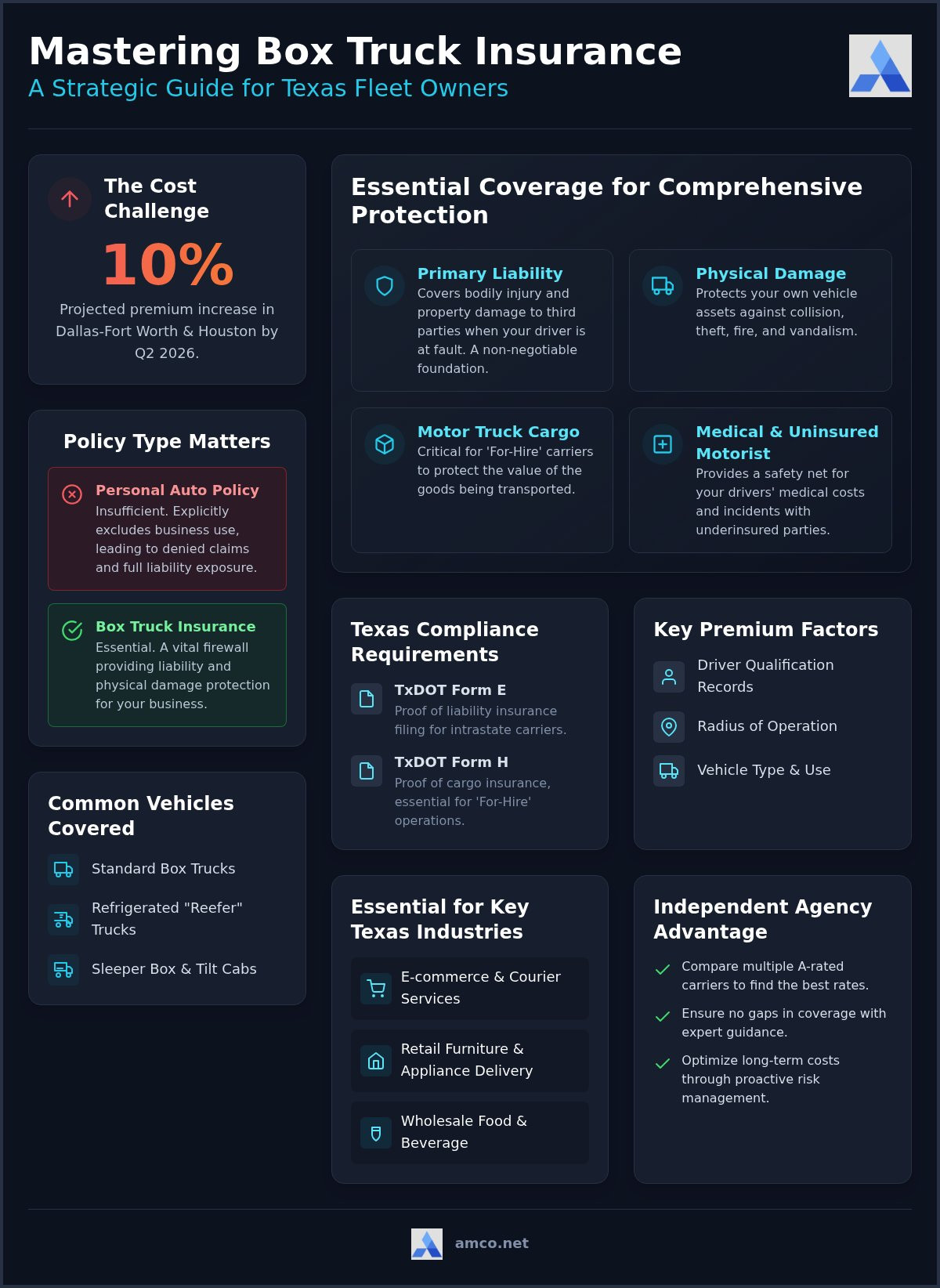
Maintaining regulatory compliance is the most fundamental aspect of protecting your business's operating authority. In Texas, the Department of Motor Vehicles (TxDMV) oversees intrastate commerce, while the FMCSA handles interstate transport. For box truck operators, this dual-layered system creates a complex filing environment. You must ensure your insurer submits Form E to the TxDMV to verify you meet the state's financial responsibility laws. If you're a household goods mover, Form H is also required to prove cargo coverage. For those crossing state lines, a BMC-91 or BMC-91X filing becomes mandatory to satisfy federal oversight.
The 26,001 lbs Gross Vehicle Weight Rating (GVWR) acts as a critical threshold in the box truck insurance landscape. Trucks exceeding this weight often face more stringent oversight and higher liability expectations from brokers and shippers. Even for smaller units, the 2026 Texas intrastate liability minimum is generally set at a $500,000 combined single limit (CSL). Verification is key; you can check your current filing status through the TxDMV’s systems to prevent unexpected out-of-service orders that halt your revenue stream.
For intrastate operations, the minimums vary based on the nature of your cargo and the weight of your vehicle. Household goods movers using vehicles under 26,000 pounds must carry at least $300,000 in liability, while those over that weight threshold require $500,000. If your straight truck transports oil or certain hazardous materials, the requirement jumps to $1,000,000. For high-hazard materials like explosives, the limit can reach $5,000,000. These aren't just suggestions; they're rigid legal requirements that must be reflected accurately on your policy filings.
Regional logistics in Houston and San Antonio often require additional documentation beyond state filings. If your drivers deliver to George Bush Intercontinental (IAH) or San Antonio International (SAT), you'll likely need specific insurance certificates that name the municipal airport authority as an additional insured. Moving companies operating within these city limits must also navigate local permitting that often exceeds state minimums. Ensuring your Commercial Trucking Insurance in Houston aligns with these local contract specs prevents costly delays at the loading dock. To ensure your filings are current and compliant with all 2026 standards, request a professional policy audit from our team today.
Selecting a box truck insurance provider in the competitive Texas logistics market requires a strategy that goes beyond simple price comparison. A direct carrier typically offers only their proprietary products, which limits your ability to adapt as your fleet grows or as contractual requirements change. An independent agency, however, acts as a professional broker. By submitting a single application, you gain the power of choice, allowing you to compare multiple A-rated carriers side-by-side. This ensures you're not just buying a policy, but a customized risk management system that aligns with your specific operational needs.
Personalized service from local agents provides a distinct advantage when navigating the high-traffic zones of the Texas Triangle. Agents who live and work in the same environment as your drivers understand the nuances of local congestion and regional liability trends. Modern fleet management also demands technological efficiency. Simplified policy management through integrated online portals and mobile tools allows you to request certificates of insurance (COIs) or update driver lists on the fly. This level of accessibility ensures that administrative requirements never slow down your trucks or your revenue stream.
AMCO.NET LLC has maintained deep roots in the Houston, Dallas, and San Antonio business communities for nearly four decades. Since 1987, we've served as a reliable partner for Texas carriers, providing the stability and professional distance required to manage complex commercial risks. Our team offers proactive claims support, focusing on minimizing business downtime and getting your vehicles back on the road. Because of our extensive market history, AMCO.NET LLC has access to specialized trucking insurers that direct-to-consumer brands often avoid, providing a critical safety net for niche or high-value hauling operations.
Preparing for a quote is a straightforward process that begins with gathering your fleet’s essential data. You'll need vehicle identification numbers (VINs), driver's license details for all operators, and recent loss runs from your current carrier. We recommend an annual insurance review for every growing fleet to ensure that coverage limits keep pace with your expanding asset base and contract obligations. For a specialized Commercial Trucking Insurance consultation, contact the team at AMCO.NET LLC to discuss how we can refine your coverage and protect your business's financial future in Texas.
Managing a delivery operation in Texas requires more than just logistical efficiency; it demands a proactive approach to risk and regulatory compliance. We've explored how specialized box truck insurance acts as a financial firewall against rising premiums in major metros, while ensuring your filings with the TxDMV and FMCSA remain flawless. By prioritizing driver safety and leveraging modern technology, you can actively influence your rating factors and protect your long-term bottom line.
Since 1987, AMCO.NET LLC has served as a trusted partner for Texas businesses, acting as expert brokers for carriers in Houston, Dallas, and San Antonio. We don't just provide coverage; we compare multiple A-rated carriers to find the specific system solution that fits your unique operational profile. Get a Fast & Professional Box Truck Insurance Quote Today to ensure your fleet is protected by decades of local expertise and reliable market access. We look forward to helping your business navigate the road ahead with stability and confidence.
Box truck insurance typically carries higher premiums than standard commercial auto insurance because of the increased vehicle weight and the liability associated with transporting freight. While a light delivery van might face lower risks, a 26-foot straight truck involves higher potential for significant property damage. Factors such as your specific cargo type and the "Houston Factor" of high-traffic congestion also contribute to the specialized rating of these commercial policies.
You need a USDOT number if your box truck operates across state lines or if it stays within Texas but has a Gross Vehicle Weight Rating (GVWR) of more than 26,000 pounds. Additionally, any vehicle transporting hazardous materials that require placarding must have a USDOT number. Even for smaller intrastate trucks, obtaining a TxDOT number is a mandatory requirement for operating legally as a commercial carrier within the state.
For box truck operators, Non-Trucking Liability (NTL) provides coverage when the vehicle is used for personal, non-business purposes outside of dispatch. Bobtail insurance technically applies to tractors operating without a trailer. Since box trucks are straight trucks with integrated cargo units, NTL is the standard choice to protect the owner during off-duty hours. This distinction ensures that your primary commercial policy isn't triggered by an accident during a personal trip.
Standard commercial policies usually exclude coverage for personal use or errands. To ensure protection during these times, you must add Non-Trucking Liability to your box truck insurance policy. This specialized endorsement covers the vehicle when it's not under dispatch. Without this specific addition, an accident occurring during a driver’s personal time could lead to a denied claim, leaving your business assets exposed to significant litigation risks.
The amount of cargo insurance you need depends largely on the value of the goods you transport and the requirements of your shippers. While federal minimums for household goods are lower, most freight brokers in Texas require at least $100,000 in cargo coverage to book premium loads. If you're hauling high-value electronics or refrigerated goods, you may need to increase these limits to match the maximum possible loss per shipment.
Yes, you can obtain coverage for a new trucking authority, though premiums are often 25% to 50% higher during the first year of operation. Insurers view new ventures as higher risk due to the lack of established safety data and loss history. AMCO specializes in helping new Texas-based carriers secure competitive rates by comparing multiple A-rated carriers that are willing to underwrite businesses in their first year of growth.
Specialized equipment like liftgates, refrigeration units, and custom shelving can be covered under the Physical Damage portion of your policy. You must explicitly list this equipment and its value when setting up your coverage to ensure it's included in the total insured value of the vehicle. If these components aren't properly scheduled, you might only receive the base value of the truck in the event of a total loss.
If your policy includes interstate authority and the necessary FMCSA filings, your coverage remains active across state lines. It's vital to ensure your box truck insurance limits meet the federal minimum of $750,000 for interstate general freight. If you only have an intrastate Texas policy and cross into another state, your insurer could deny the claim, and you could face severe penalties for operating outside your authorized radius.