

Did you know that the average cost of Homeowners Insurance in Texas is now approximately 60% higher than the national average? For many residents, the annual premium for $300,000 in dwelling coverage has climbed toward $4,000, creating a significant budgetary strain. You likely feel the pressure of these rising rates and the confusion caused by shifting underwriting standards, especially regarding roof age and deductible structures. It is a frustrating reality for those trying to protect their most valuable asset while national carriers tighten their requirements.
We understand that you want more than just a policy; you need a localized risk management strategy that ensures financial continuity. This guide provides the expert insights necessary to balance comprehensive protection with cost efficiency. We will examine the impact of the September 2026 Texas FAIR Plan rate changes, the new mandatory explanations for policy cancellations effective this year, and the critical differences between standard coverage and essential endorsements for wind and hail damage. By the end of this analysis, you will have a clear roadmap for securing your home against the unique environmental and regulatory challenges of the Texas market.
Homeowners insurance acts as a binding contract between a property owner and an insurance carrier, providing financial protection against losses to a private residence and its contents. While the concept is universal, Understanding Homeowners Insurance within the specific context of the Texas market requires an appreciation for the state's unique environmental risks. Texas homeowners face difficulties that residents in other states rarely encounter. The state is essentially four different catastrophe markets rolled into one, featuring Gulf Coast hurricanes, Panhandle hailstorms, North Texas tornadoes, and Central Texas wildfires. This high exposure to natural disasters explains why premiums here are approximately 60% higher than the national average.
To better understand how these costs and coverages integrate into your home purchase process, watch this helpful video:
You must distinguish between "replacement cost" and "actual cash value" (ACV) when reviewing policy language. Insurers in Texas are increasingly using actual cash value roof schedules, which can significantly lower your claim payout as your roof ages. A replacement cost policy pays to repair or replace your property at current market prices without deducting for depreciation. Conversely, ACV policies only pay the depreciated value at the time of the loss. This distinction is critical in a state prone to frequent hail events. While Texas law doesn't mandate that you carry this coverage, your lender will almost certainly require it as a condition of the loan to protect the asset's value.
Homeowners insurance serves as a risk-transfer mechanism for property owners. This protection extends beyond the physical walls to your personal belongings, such as furniture and electronics, which are often covered even when they're located outside the home. Safeguarding your largest financial investment from catastrophic events is the primary goal, ensuring that a single storm doesn't result in total financial ruin. By transferring the potential cost of rebuilding to a carrier, you maintain long term financial stability despite the volatile Texas weather.
Many homeowners overlook the liability portion of their policy, yet it provides essential asset protection. If a guest is injured on your property and files a lawsuit, your liability coverage pays for legal defense and settlements. Additionally, "no-fault" medical payments cover small injuries to guests regardless of who's at fault. This feature often prevents minor accidents from escalating into expensive litigation, providing a calm and reliable safety net for your household. It's a critical component that protects your future earnings and savings from unforeseen legal challenges.
A robust Homeowners Insurance policy is composed of several distinct functional layers. Dwelling coverage provides the primary defense, securing the physical structure against environmental threats. Given that building costs have continued to rise, as evidenced by the 2026 adjustments to FAIR Plan limits, ensuring your dwelling limit reflects current reconstruction prices is essential for financial continuity. Other Structures coverage extends this protection to detached assets like garages, sheds, and fences, which are frequently damaged during the high-wind events common across the state.
Personal Property coverage safeguards your internal assets, including electronics, furniture, and clothing. It's vital to confirm whether your policy uses replacement cost or actual cash value for these items, as depreciation can significantly reduce your claim payout. Additionally, Loss of Use coverage provides a critical safety net. If a disaster like a hurricane or a severe freeze makes your residence uninhabitable, this component covers the increased cost of temporary living arrangements, ensuring your family's stability during the recovery phase.
Policies typically protect against standard perils such as fire, lightning, and hail. However, the Texas Department of Insurance frequently reminds residents that flood damage is a universal exclusion in standard contracts. Homeowners in flood-prone regions like Houston must secure separate protection to avoid catastrophic out-of-pocket losses. When selecting a policy, you'll choose between "Open Perils" coverage, which offers broad protection unless an event is specifically excluded, and "Named Perils," which only covers the specific risks listed in the document. For those seeking a balanced approach to these complex options, consulting with a professional to compare Homeowners Insurance quotes can clarify which limits best suit your property's specific risk profile.
Liability protection is designed to shield your personal wealth from legal claims. This coverage applies in scenarios where you're found legally responsible for bodily injury or property damage, such as a guest tripping on an uneven walkway or a pet causing injury to a neighbor. While standard policies often include a base level of liability, many Texas property owners opt for higher limits or umbrella policies to protect their long-term financial interests. Guest medical payments serve a different role; they provide "no-fault" coverage for minor medical bills if someone is injured on your property. This small but effective provision often prevents minor accidents from escalating into costly and stressful litigation.
Pricing for Homeowners Insurance in Texas is calculated through a complex analysis of both macro-environmental risks and micro-property data. Your specific ZIP code often dictates the baseline for your premium. For instance, homeowners in Houston pay an average of $5,714 annually, which is approximately 28% higher than the state average. This disparity stems from the increased probability of hurricane damage and localized flooding along the Gulf Coast. Beyond geography, carriers evaluate your claims history and credit-based insurance scores. In Texas, these scores are a standard part of the underwriting process, as actuarial data suggests a correlation between credit health and the likelihood of future claims.
Carriers also scrutinize your property's claims history over the last three to five years. Frequent small claims for minor repairs can signal a higher risk profile, potentially leading to non-renewal or significantly higher rates. It's often more cost-effective to handle minor maintenance out-of-pocket to preserve your "claims-free" status. This strategic approach to policy management is essential in a market where cumulative rate increases have reached double digits in recent years. By understanding these variables, you can take proactive steps to mitigate the factors that drive your costs upward.
Regional variations create a fragmented insurance market across the state. While San Antonio residents might face lower rates due to reduced hurricane exposure, they still contend with significant hail risks. A critical factor often ignored by national guides is the specific "Windstorm and Hail" deductible. In coastal counties, this is usually a percentage of the dwelling limit, often ranging from 2% to 5%, rather than a flat dollar amount. Local fire department ratings also influence your costs; properties located within a short distance of a high-rated station generally see lower premiums due to improved fire suppression capabilities.
Your home's physical condition serves as a primary underwriting lever. A new roof is perhaps the most effective way to secure a discount, as insurers are increasingly wary of aging shingles that fail during routine hailstorms. Many carriers have implemented stricter rules regarding roof age, often requiring an inspection or shifting to actual cash value schedules for roofs older than 15 years. Modernizing your electrical and plumbing systems also improves carrier eligibility; many companies now refuse to insure homes with outdated aluminum wiring or galvanized pipes. Implementing monitored security systems and smoke detectors provides incremental savings, though these are secondary to structural resilience.
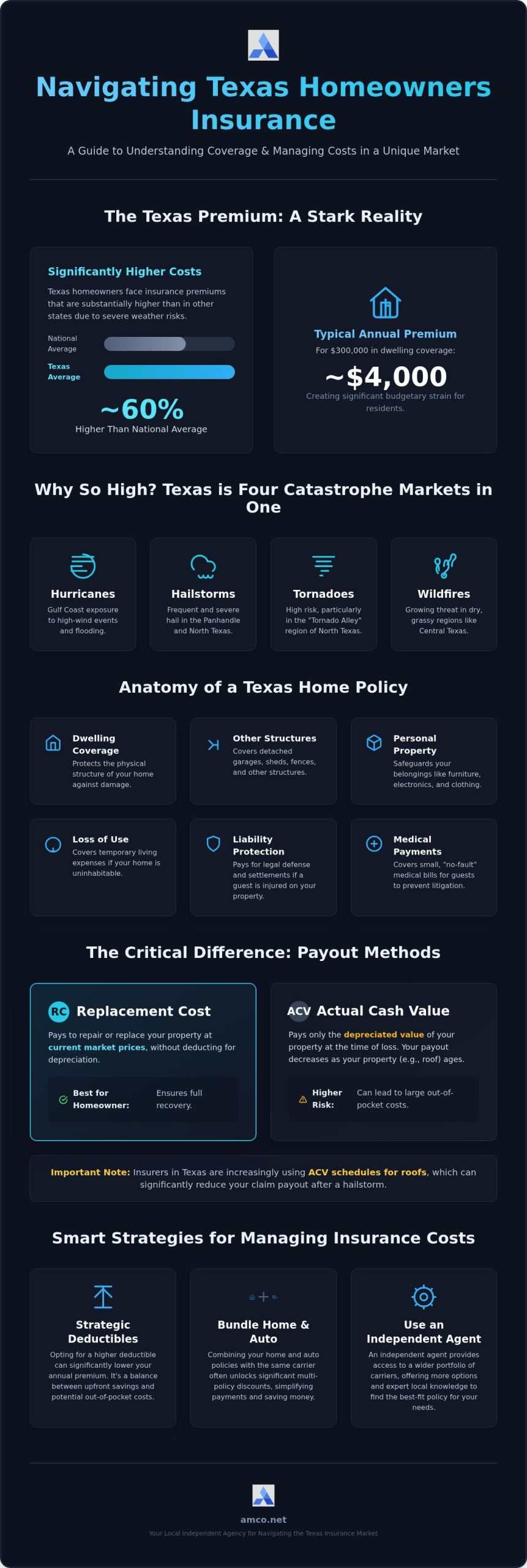
Achieving a balance between manageable premiums and high protection levels requires a methodical approach to policy structure. One primary lever is the selection of your deductible. While a lower deductible reduces out-of-pocket expenses during a claim, it significantly increases your recurring costs. Conversely, increasing your standard deductible from $1,000 to $2,500 can lead to substantial long-term savings. You should ensure you have sufficient liquid reserves to cover this higher amount if a loss occurs. This strategy effectively shifts minor maintenance risks to the homeowner while preserving the policy for catastrophic events.
Accurate home valuation is another critical factor in managing costs. Many homeowners mistakenly insure their property based on its market value, which includes the price of the land. Since land isn't subject to perils like fire or wind, you only need to cover the cost of rebuilding the structure. Over-insuring leads to unnecessary premium expenses. Conducting an annual review of your Homeowners Insurance allows you to adjust limits based on recent home improvements or changes in local construction labor rates. This ensures your coverage remains precise and cost-effective as market conditions evolve.
Carriers offer a variety of credits that can reduce your financial burden without thinning your protection. Independent agencies are particularly adept at identifying these opportunities across different providers. Common discounts include:
The most effective method for securing deep discounts is through multi-policy arrangements. Linking your property policy with car insurance in Houston creates significant savings that are often unavailable through standalone contracts. This approach also simplifies your administrative burden by providing a single point of contact for all your protection needs. Bundling can often reduce total premiums by up to 20% in the Texas market. Unlike national carriers that only offer internal discounts, an independent agent can compare bundled packages across a diverse portfolio of carriers to find the most efficient solution for your household. To identify every available credit for your specific property, you can request a comprehensive policy review from AMCO.NET LLC.
Selecting Homeowners Insurance through a captive agent often limits your options to a single brand's underwriting appetite and pricing structure. AMCO.NET LLC operates on an independent broker model, providing you with access to a diverse portfolio of third-party carriers. This systemic approach ensures that your specific risk profile is matched with a provider offering the most competitive rates and robust coverage terms. Serving the Texas market since 1987, the agency has developed deep roots in the community and a specialized understanding of Gulf Coast environmental risks. This historical perspective allows for a level of stability and professional humbleness that automated, national platforms cannot replicate.
While the agency prioritizes human expertise, it integrates modern technological solutions to streamline the policy management process. Clients can manage quotes, payments, and claims through a dedicated mobile app. This combination of traditional advisory services and digital accessibility ensures operational continuity for busy homeowners. Having a professional partner who understands the local regulatory environment provides a level of security that goes beyond a simple transaction. It transforms insurance from a recurring expense into a managed financial asset.
Direct buying often leaves homeowners vulnerable during the complex claims process. An independent broker acts as an intermediary, advocating for your interests when navigating property losses. This role is particularly valuable for high-value properties that require specialized insurance houston expertise. By analyzing your unique infrastructure, such as the age of your roof or specific safety upgrades, an expert advisor identifies coverage gaps that standard algorithms frequently overlook. This personalized attention ensures that your Homeowners Insurance policy is precisely calibrated to your property's actual needs.
The process begins with a comprehensive consultation to identify existing vulnerabilities in your current protection strategy. Whether you're located in San Antonio, Dallas, or Austin, you can obtain an accurate quote through the online portal or the mobile app. This initial assessment moves beyond simple price comparison to focus on long-term financial resilience and risk mitigation. Once the consultation is complete, AMCO.NET LLC manages the transition between carriers, ensuring there are no lapses in your coverage. This methodical onboarding process establishes a foundation for a long-term professional partnership built on trust and technical competence.
Managing a residence in the Lone Star State requires a transition from passive coverage to an active risk management strategy. As analyzed throughout this guide, regional environmental factors and shifting regulatory standards necessitate a policy that is both flexible and robust. By optimizing your deductible structures and utilizing the significant savings offered by multi-policy bundling, you can achieve a high level of protection without exceeding your budgetary parameters. It's evident that the diverse Texas landscape demands more than the generic solutions offered by many national providers.
Securing the right Homeowners Insurance involves a technical understanding of local risks that only comes with decades of experience. Since 1987, AMCO.NET LLC has served as a reliable independent partner, providing access to a broad portfolio of A+ rated carrier options. Our deep expertise in Houston and the surrounding metropolitan areas allows us to identify specific vulnerabilities and suggest precise technological solutions for your property. You deserve the stability and professional continuity that a dedicated local agency provides.
We invite you to Get a Fast Homeowners Insurance Quote from AMCO.NET LLC to begin your comprehensive policy review. Protecting your most significant financial asset is a task that rewards professional diligence and local insight.
Homeowners insurance isn't legally mandated by the State of Texas, unlike auto liability coverage. It's almost always a contractual requirement imposed by mortgage lenders to protect their financial interest in the property. If you own your home outright, you aren't legally forced to maintain a policy. However, skipping coverage leaves your largest asset vulnerable to total loss from fire or storms, which is a risk most financial advisors recommend against.
Standard policies in Texas don't cover damage caused by rising water or floods. This exclusion applies to almost all residential contracts regardless of the carrier. To protect your property from Houston's frequent heavy rain events or coastal surges, you must secure a separate flood policy. These are available through the National Flood Insurance Program or private markets. Relying on a standard policy for flood protection is a dangerous oversight.
You should base your coverage on the total reconstruction cost of the physical structure rather than the current market value. Market value includes the land price, which doesn't require protection from perils like fire or wind. A professional replacement cost estimate ensures you have enough capital to rebuild at current labor and material rates. It's also vital to select personal property limits that reflect the actual value of your household contents.
The average annual cost for Homeowners Insurance in Texas currently ranges between $3,899 and $4,458 for a home with $300,000 in dwelling coverage. These figures are approximately 60% higher than the national average due to the state's extreme weather patterns. Prices in Houston are typically 28% higher than the state average. Your final premium depends on specific factors like ZIP code, roof age, and your selected deductible levels.
You can still secure coverage with a history of claims, though your carrier options and premium costs will likely change. If multiple insurers decline your application, the Texas FAIR Plan serves as a residual market option for eligible homeowners. Carriers view frequent claims as a sign of higher risk, which often leads to stricter underwriting rules. Working with an independent agency allows you to compare different high-risk providers to find a manageable solution.
A windstorm deductible is a specific out-of-pocket cost for damage resulting from wind or hail events. In coastal regions, this is usually calculated as a percentage of your dwelling limit, such as 2% or 5%, rather than a flat dollar fee. For a $300,000 home with a 2% deductible, you'd pay $6,000 before insurance covers the repair. This structure is common in Southeast Texas to manage the high risk of hurricane damage.
Insurers in Texas use credit-based insurance scores to help determine your premium. Actuarial data shows a strong correlation between financial responsibility and a lower frequency of property claims. A higher credit score generally results in lower rates, while a lower score can lead to higher costs or limited carrier options. It's one of several data points, along with home age and location, used to calculate your specific risk profile and final price.
Operating a business from your residence often requires additional coverage beyond a standard policy. Most residential contracts provide very limited protection for business property and generally exclude liability for business-related injuries. If you have inventory, specialized equipment, or clients visiting your property, you should consider a business endorsement or a separate commercial liability policy. This ensures your professional activities don't create a gap in your essential Homeowners Insurance protection.