

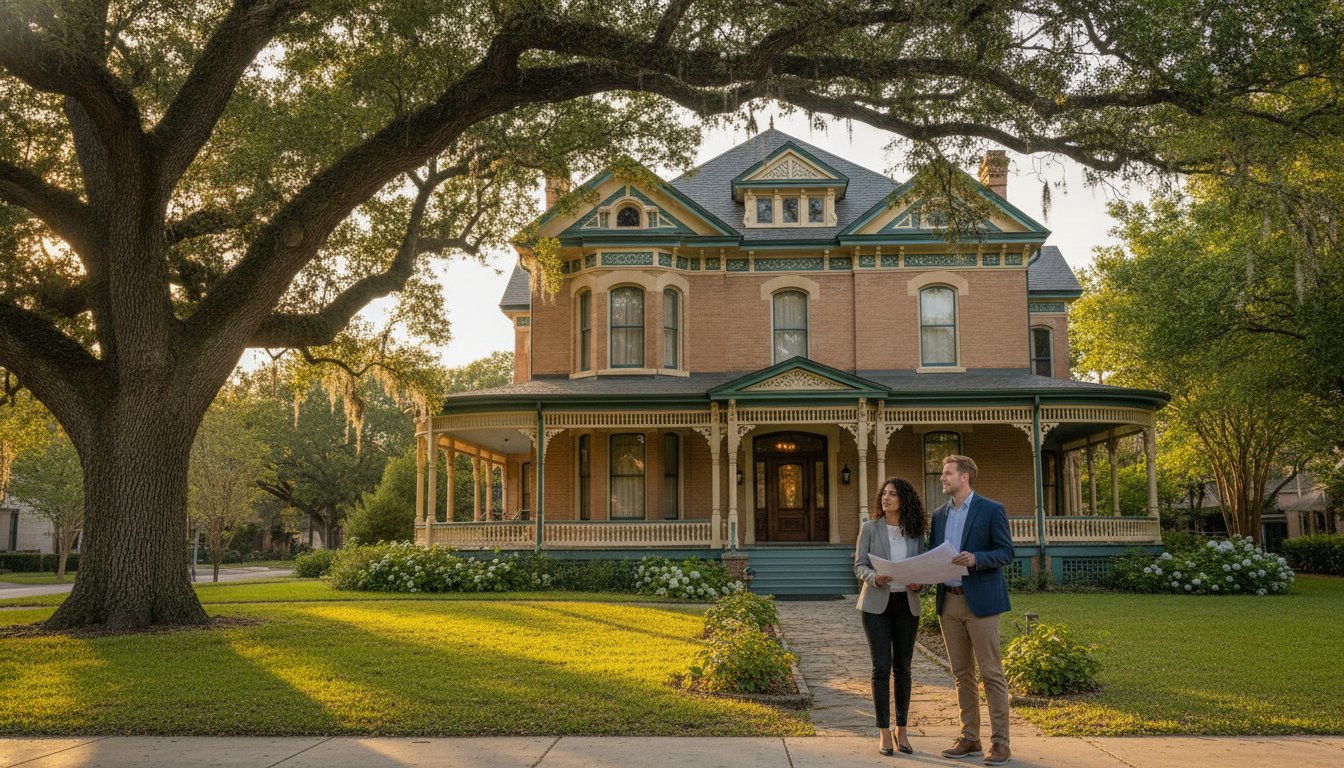
What if the very architectural details that make your property a landmark are the same reasons your current insurer is threatening to cancel your policy? Many owners in districts like King William or Monte Vista discover that standard carriers lack the technical appetite for structures over 50 years old, especially when faced with San Antonio's rigorous Office of Historic Preservation (OHP) mandates. You understand that your home isn't just a building; it's a piece of Texas heritage that requires specialized protection. Finding reliable homeowners insurance for historic homes in San Antonio often feels like a choice between inadequate coverage and prohibitively high premiums driven by outdated electrical or plumbing systems.
This 2026 guide provides the professional insight required to align your policy with local regulations while securing the financial integrity of your investment. We'll analyze why the 20% tax exemption for new historic districts matters for your valuation and how to manage the complexities of 'Ordinance or Law' requirements. You'll learn the functional differences between HO-3 and HO-8 policies, ensuring that any future repairs meet OHP standards without exhausting your personal capital. Our objective is to move beyond generic coverage toward a systemized solution that accounts for specialized materials and the true cost of historic restoration.
In San Antonio, "old" and "historic" are distinct legal categories that significantly impact your risk profile. A property built in 1925 might simply be an aged structure, but if it sits within King William, Monte Vista, or Monticello Park, it likely carries a formal designation. This status triggers specific oversight from the San Antonio Office of Historic Preservation (OHP). For those seeking homeowners insurance for historic homes in San Antonio, this distinction is the primary factor determining which carriers will offer a quote and which will decline the risk immediately.
The OHP manages the city's architectural integrity through the Certificate of Appropriateness (COA) process. If your home is a designated landmark or resides in a Local Historic District (LHD), any exterior repair must meet strict historical accuracy standards. Insurers view this as a potential cost multiplier. They know that a standard roof replacement or window repair isn't possible; you'll need specialized artisans and period-correct materials. This regulatory layer is what separates a standard policy from a specialized historic property contract.
To better understand the complexities of this specialized market, watch this detailed webinar:
Property owners often assume that a listing on the National Register of Historic Places is the most critical factor for insurance. While prestigious, this national status is often honorary and doesn't always impose strict repair mandates. Local designations carry more weight in the underwriting process. A San Antonio Landmark (SAL) designation or inclusion in an LHD creates a binding legal requirement for restoration. Underwriters prioritize local zoning because it dictates the "Ordinance or Law" coverage limits. They must account for the city's power to force a rebuild using 19th-century methods rather than modern, cost-effective alternatives.
As of 2026, the industry's standard "50-year rule" places the underwriting threshold at 1976. Homes built before this date undergo rigorous scrutiny of their core systems. In neighborhoods like Monticello Park, insurers specifically look for legacy issues such as knob and tube wiring, galvanized plumbing, or unreinforced masonry. The Texas Historical Commission may provide guidance on property value, but insurers focus on the functional risk of these aging components. If your systems haven't been modernized, standard carriers often refuse coverage. Securing homeowners insurance for historic homes in San Antonio requires a policy that acknowledges these structural realities without penalizing the property's inherent value.
Choosing the correct policy form is a technical decision that dictates how a carrier calculates a loss and, more importantly, how much you'll pay out of pocket for repairs. For those securing homeowners insurance for historic homes in San Antonio, the choice usually narrows down to the HO-3 and the HO-8 forms. These documents aren't interchangeable. The HO-3 is an "open peril" policy, meaning it covers all risks except those specifically excluded. In contrast, the HO-8 is a "named peril" policy, which only covers the specific events listed in the contract. This distinction is vital when protecting a property with high architectural value.
The financial impact of this choice centers on the difference between Replacement Cost and Actual Cash Value (ACV). An HO-3 policy typically aims for full replacement cost, allowing you to rebuild using modern materials of like kind and quality. However, for a landmark property, "like kind" must align with San Antonio's Historic Design Guidelines. If your policy doesn't explicitly account for these standards, you might find yourself underinsured when the Office of Historic Preservation requires period-correct masonry or custom-milled woodwork that exceeds standard material costs.
The HO-8 form is often the only viable path for homes where the replacement cost vastly exceeds the current market value. If your King William estate features hand-carved limestone or intricate lath-and-plaster walls, the cost to replicate those features might be double the home's sale price. Carriers use the HO-8 to limit their exposure by offering "Functional Replacement Cost." This means if a fire damages your historic walls, the insurer pays to replace them with modern drywall rather than original plaster. It's a pragmatic choice for owners who prioritize basic structural protection over museum-quality restoration. If you're struggling to find a carrier willing to offer more than basic ACV coverage, reviewing your options with an independent agent can help you identify specialized surplus lines.
Most San Antonio homeowners should strive for an HO-3 policy enhanced with specific endorsements. This "Special Form" coverage is the gold standard because it provides superior protection against Texas windstorms and hail, which are frequent threats in Bexar County. By adding a "Guaranteed Replacement Cost" endorsement, you protect yourself against the inflation of specialized labor costs. This ensures that if a storm damages your slate roof, the policy pays for the actual cost of a qualified artisan to perform the work, regardless of the face value of the policy. This level of precision is necessary for maintaining the long term value of homeowners insurance for historic homes in San Antonio.
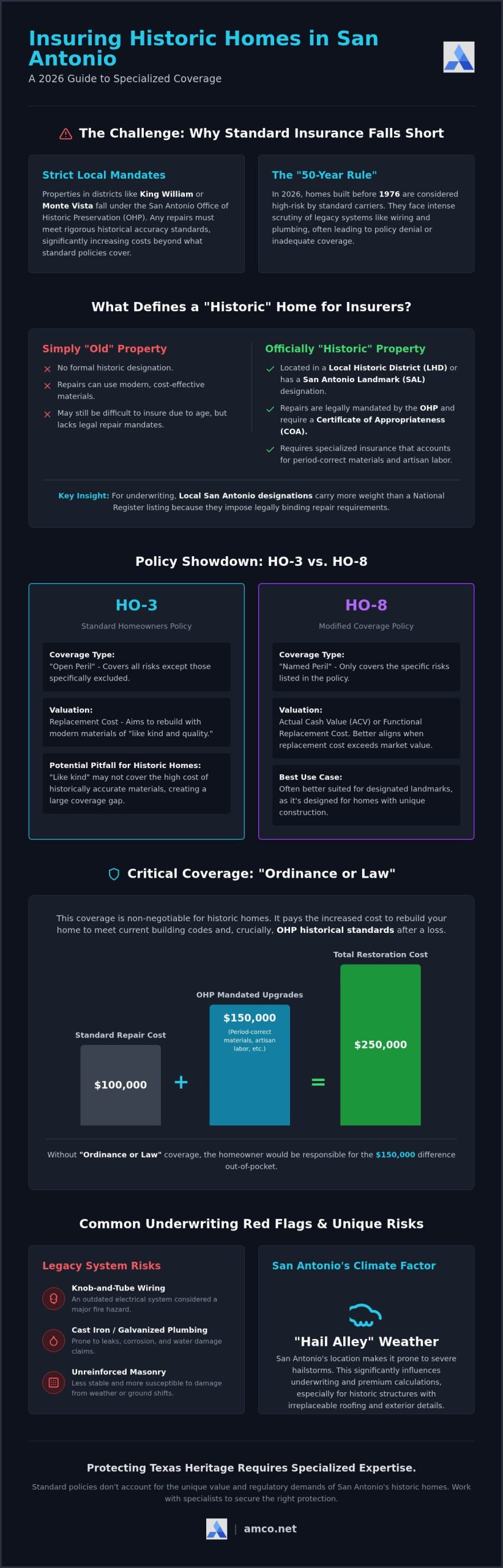
Standard policies are designed for modern subdivisions where materials are uniform and building codes are predictable. In San Antonio's historic districts, the gap between "standard repair" and "legal restoration" can create a financial deficit that many homeowners don't realize exists until they file a claim. Securing homeowners insurance for historic homes in San Antonio requires a strategic approach to endorsements that address the specific physical and regulatory risks of Bexar County’s heritage properties.
Beyond the structure itself, owners must account for the aging infrastructure beneath their feet. Many homes in neighborhoods like King William still rely on original clay or cast iron service lines. These materials are prone to collapse or root intrusion; repairs often require expensive excavation that standard dwelling coverage excludes. Including Service Line Coverage and Sewer Backup endorsements is a technical necessity for properties with legacy plumbing systems and deep crawlspaces.
Ordinance or Law coverage is the most critical endorsement for any OHP-regulated property. If a fire or storm damages more than 50% of your structure, local building codes often require the entire building to be brought up to current safety and energy standards. In 2026, compliance with updated Texas energy codes and San Antonio safety regulations can increase restoration costs by 30% to 50% compared to standard construction. Without this coverage, your insurer will only pay for the cost of repairing the damage using modern, non-historic materials. You would be left to fund the massive price difference for OHP-mandated, period-accurate wood, masonry, or specialized roofing out of your own pocket.
The architectural value of a San Antonio landmark often resides in its unique details, such as stained glass windows, limestone exteriors, or original longleaf pine flooring. Standard adjusters typically use a "lowest-bid" model that prioritizes speed and cost over historical accuracy. To avoid this, seek policies that offer "Agreed Value" for specific architectural elements. This ensures that the payout is based on a pre-determined appraisal of the item's worth rather than a depreciated market rate.
Professional restoration also requires specialized contractors who understand the nuances of 19th-century construction. High-quality homeowners insurance for historic homes in San Antonio should allow for the use of these expert artisans. This prevents the common conflict where an insurer’s preferred vendor lacks the skills to meet the Office of Historic Preservation’s rigorous craftsmanship standards. Ensuring your policy includes Scheduled Personal Property for antique fixtures or built-in heritage elements provides a final layer of security for the home’s irreplaceable character.
San Antonio's geographic location and architectural age create a unique intersection of risk for insurance underwriters. While the aesthetic value of a 1910 Victorian is undeniable, insurers focus on the operational viability of its core systems. In 2026, the cost of homeowners insurance for historic homes in San Antonio is heavily influenced by the proximity to municipal fire services and the presence of legacy utilities. Because older neighborhoods often feature narrow streets and dense construction, underwriters prioritize homes within five miles of a fire station to mitigate potential total loss scenarios. If your property is further out, you can expect higher premiums due to the increased response time for emergency services.
For structures exceeding the 50-year threshold, a standard home inspection isn't sufficient for the underwriting process. Carriers require a specialized 'Four Point' inspection that focuses specifically on HVAC, electrical, plumbing, and roofing. Certain legacy components are immediate deal-breakers for standard carriers. Federal Pacific Electric (FPE) panels and Zinsco breakers are frequently blacklisted due to documented failure rates. Similarly, unlined chimneys or wood-burning stoves without proper clearance can trigger a refusal to quote. To secure 'Preferred' rates, owners should provide professional documentation of system upgrades, such as copper wiring conversions or the installation of PEX plumbing. Documenting these improvements changes the risk profile from "unrenovated legacy" to "modernized heritage," which is far more attractive to top-tier insurers.
Bexar County’s position in "Hail Alley" means that roofing material is the single most scrutinized element of the policy. The 2026 trend in the Texas market involves mandatory separate deductibles for wind and hail, often set at 1% or 2% of the dwelling value. For historic properties, this is particularly challenging because OHP standards may require expensive slate or clay tiles. To manage these costs, owners should investigate UL 2218 Class 4 impact-resistant materials that mimic historic aesthetics; these often qualify for significant premium discounts. These materials provide the durability underwriters want without violating the visual requirements of your historic district.
Beyond the roof, the expansive clay soils of South Texas present a constant threat to historic foundations. Soil expansion and contraction can lead to structural shifting that many policies exclude. Implementing a consistent foundation watering schedule or installing root barriers are effective mitigation strategies that demonstrate proactive risk management. If you're facing high premiums due to these environmental factors, get a specialized quote to see how an independent brokerage can access more competitive markets tailored to your specific zip code.
"Big Box" insurers rely on automated underwriting models that prioritize volume and predictability. These algorithms are rarely calibrated for the complexities of a 19th-century limestone estate or a mid-century landmark in Monticello Park. When you apply for homeowners insurance for historic homes in San Antonio through a direct-to-consumer carrier, you're often met with flat rejections based on the age of the structure or the lack of modern system documentation. These companies aren't equipped to assess the nuances of OHP restoration mandates or the value of specialized craftsmanship. They prefer the uniformity of modern subdivisions, leaving heritage property owners with limited, often inadequate, options.
An independent brokerage functions as a consultative partner rather than a mere transactional agent. In the 2026 Texas insurance environment, carriers are scrutinizing age-related risks more than ever. The increasing frequency of extreme weather events in Bexar County has led many national brands to tighten their underwriting guidelines for homes built before 1976. Working with a local agent who understands the specific geographical risks of San Antonio allows for a more nuanced presentation of your property to the market. We don't just submit a form; we build a case for the insurability of your home based on its upgrades and historical significance.
Certain carriers focus exclusively on "High-Value Home" programs designed for historic districts. These underwriters understand that a home in King William requires a different risk assessment than a newer development in Stone Oak. AMCO.NET LLC leverages over 35 years of Texas-specific expertise to present your property to these niche underwriters. Instead of your application being rejected by a computer, we shop the risk to multiple carriers who value the stability and long term preservation of San Antonio's historic neighborhoods. Surplus lines carriers are often the only solution for properties that fall outside the standard box. These insurers have more flexibility in their policy language and pricing, which is essential when dealing with OHP-regulated repairs.
Relying on an automated online quote is risky for a property with unique architectural elements. These tools often miss the value of your restoration work or the specific Ordinance or Law requirements discussed in previous sections. A professional risk assessment involves a human-led analysis of your systems and your home's history. This methodical approach ensures your policy limits are sufficient to secure the right homeowners insurance for historic homes in San Antonio and meet city standards after a loss. A local broker understands that your hand-carved woodwork or original longleaf pine flooring isn't just a "finish"; it's a structural asset that requires precise valuation. Protect your San Antonio legacy—get a historic home insurance quote from AMCO today.
Protecting a property in King William or Monte Vista requires more than a standard policy; it demands a technical alignment between your coverage and local preservation mandates. Success in this specialized market relies on balancing OHP compliance with robust endorsements like Ordinance or Law coverage. By addressing legacy structural systems through documented upgrades, you shift your property from a high-risk category to a preferred heritage asset that underwriters are eager to compete for. This strategic approach ensures that your restoration reflects the true craftsmanship of the original build while maintaining modern safety standards.
Securing homeowners insurance for historic homes in San Antonio is a complex process that benefits from decades of local market experience. Since 1987, our independent brokers have worked directly for the homeowner, not the carrier, to navigate the unique requirements of Bexar County’s historic districts. We provide the specialized expertise needed to ensure your architectural legacy remains protected against Texas climate risks and evolving regulatory landscapes. Ready to move beyond generic automated quotes? Get a Specialized Historic Home Insurance Quote and partner with a consultative expert who understands the value of your San Antonio heritage. Your home is a piece of Texas history; it deserves a policy built to preserve it.
Yes, premiums for heritage properties are typically higher than those for modern construction. This cost difference reflects the specialized materials and skilled labor required to meet San Antonio's historic preservation standards. Insurers also account for the increased risk associated with aging infrastructure and the potential for a "total loss" if a fire occurs in a structure with non-standard building materials.
Ordinance or Law coverage pays for the additional costs required to bring a damaged structure up to current building codes during a repair. For properties in districts like King William, this is essential because the Office of Historic Preservation often mandates specific, expensive restoration methods. Without this endorsement, your policy only covers the cost of repairing the damage using modern, basic materials, leaving you to pay the difference for historic compliance.
You can qualify for an HO-3 policy if the home's core systems have been fully modernized. Carriers specifically look for updated electrical panels, copper or PEX plumbing, and a roof replaced within the last 15 years. If the home still utilizes legacy systems like knob and tube wiring, you will likely be restricted to an HO-8 policy, which offers more limited "Actual Cash Value" protection.
Replacement of original materials is only covered if you have secured a policy with a "Replacement Cost" provision and specific historic endorsements. Standard policies often default to "functional replacement," which would replace a limestone exterior with modern siding or longleaf pine with standard oak. To ensure your homeowners insurance for historic homes in San Antonio covers authentic materials, you must establish an "Agreed Value" for these unique architectural elements.
The primary underwriting deal-breakers include Federal Pacific Electric (FPE) panels, unlined masonry chimneys, and galvanized plumbing. Insurers also scrutinize roofs that have sustained multiple hail repairs without a full replacement. In the 2026 market, any signs of active foundation shifting due to South Texas soil conditions can also result in a refusal to quote until professional remediation is documented.
The OHP is a regulatory body and does not offer insurance products or specific carrier recommendations. Their role is to provide the Design Guidelines that dictate how your property must be maintained and repaired. You should provide these guidelines to your independent broker so they can ensure your policy limits are high enough to cover the cost of OHP-mandated restoration work.
The most effective way to reduce costs is to complete a "Four Point" inspection that proves your HVAC, plumbing, electrical, and roofing systems are modernized. Installing a UL 2218 Class 4 impact-resistant roof can also trigger significant discounts in Bexar County's "Hail Alley." Working with an independent broker is vital, as they can access niche carriers that specialize in homeowners insurance for historic homes in San Antonio rather than using generic "Big Box" pricing models.
A total rebuild to original specifications is only guaranteed if your policy includes a "Guaranteed Replacement Cost" endorsement with a "Historic Restoration" rider. Most standard policies will only pay up to the stated dwelling limit using modern construction methods. If you want to ensure your home is rebuilt with its original architectural integrity, your policy must be structured to account for the contemporary costs of specialized heritage artisanship.